
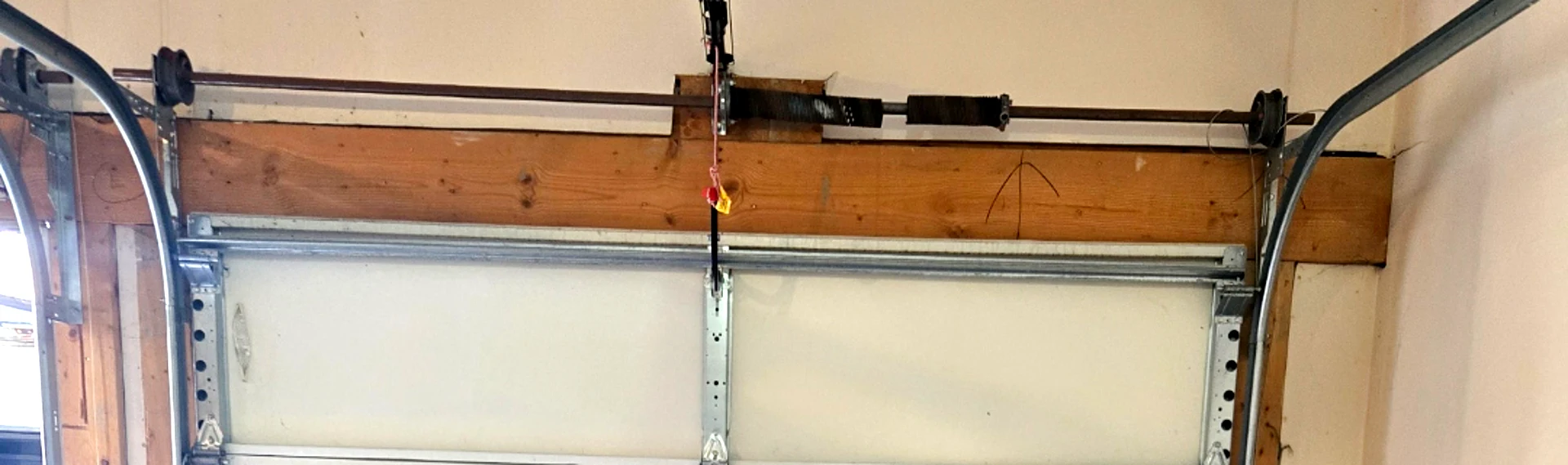
How Long Do Garage Door Springs Last? Real Numbers from an Ottawa Tech
Quick answer
A standard residential garage door spring is rated for 10,000 cycles — roughly 7-10 years at typical use (4-6 daily cycles). High-cycle springs (20,000-30,000 cycles) last 15-25 years. Ottawa winters typically shave 1-2 years off any spring's life. Both springs should always be replaced together, in pairs.
"How long do garage door springs last" is one of the most-asked questions we get on the phone — usually right after someone hears a loud bang and realizes they need to know whether this is normal or whether the contractor who installed their door 5 years ago sold them junk. The honest answer involves understanding what a "cycle" is, what the actual rating numbers mean, and what's realistic in Ottawa's climate.
What's a "cycle"?
One cycle = one open and one close. So if you open the garage to leave for work and close it behind you, that's one cycle. When you come home and open it again to park, that's a second cycle. Most Ottawa households run their garage door 4-6 times a day — kids leaving for school, partners going to work, errands, taking out the trash, coming home.
At 4-6 cycles per day, here's what spring ratings translate to in real life:
- 10,000-cycle spring — 5-7 years
- 15,000-cycle spring — 7-10 years
- 20,000-cycle spring — 10-14 years
- 30,000-cycle spring — 15-21 years
Most garage doors sold in Ottawa over the past 15 years come standard with 10,000-cycle springs because that's what builders specify to keep build costs down. If you bought your house new and didn't request high-cycle springs, that's what you have.
Why your springs might fail earlier than rated
Cycle ratings are calculated under ideal conditions — moderate temperature, good lubrication, a perfectly balanced door, no rust. Real life is messier. Here's what shortens spring life in Ottawa specifically:
Cold weather brittleness
Steel becomes more brittle at -20°C. A spring that's done 9,000 cycles and would have lasted another year in July will often snap on a cold January morning. Cold doesn't damage springs — it just exposes the wear that's already there. This is why Ottawa garage door techs run more spring jobs in January and February than any other two months.
Road salt and corrosion
Salt water spray off your car onto the spring (which mounts above the door, inside the garage) accelerates rust. Surface rust is fine. Pitting rust eats into the steel and creates stress points that fracture under tension. Wiping the springs once a year with a damp cloth and re-lubricating prevents most of this.
Poor lubrication
Springs need a thin film of grease to slide smoothly as they wind and unwind. Dry springs squeak, store less energy, and stress at the same points repeatedly. Spray a silicone or white lithium grease along the coils once in spring, once in fall. Five-minute job. We do it free on any service call.
Unbalanced door
If the door has gained weight (extra layer of paint, new heavy insulation, a stuck weather seal adding drag) without the springs being adjusted, those springs are doing more work per cycle than they were rated for. The opener also strains, the door becomes sluggish, and the springs fatigue faster. We re-balance doors as part of every spring replacement.
Cheap original springs
Not all "10,000-cycle" springs are created equal. Lower-grade Chinese springs sold in big-box stores often deliver 6,000-7,000 real cycles before failure. Pro-installer springs from suppliers like DASMA-certified manufacturers actually hit the rated number. If your house was new-built by a volume builder, you may have the cheap ones.
Visible warning signs your springs are nearing end-of-life
Springs almost never just snap with no warning — there's usually 2-6 months of visible decline first. What to look for:
- Visible gap between coils when the door is in the down position. Healthy springs have tight, even coils. A gap of 1/4-inch or more means the spring has stretched permanently.
- Rust streaks visible along the coils. Surface rust is fine. Deep pitting rust on a 10+ year old spring means replacement.
- Door is heavier to lift manually than it used to be. Disconnect the opener (red release rope) and lift the door halfway. A balanced door should stay where you put it. A door that crashes down means the springs aren't carrying their share.
- Opener straining or buzzing for longer than it used to. Same lift, more effort = the springs are doing less of the work.
- Door slams shut faster than it used to. The springs are also responsible for slowing the descent. A door that closes hard is one with tired springs.
- Visible distortion on the spring — bent shape, twisted coils, or one coil sitting differently than the others.
Why springs are always replaced in pairs — both springs were installed the same day and have been doing the same work. If one snapped, the other is statistically at or past end-of-life. Replacing only one creates two problems: (1) the unbalanced door wears the new spring faster, and (2) you'll be calling someone back within months for the second spring. Any reputable garage door tech in Ottawa will tell you the same thing.
How to extend your springs' life
Realistic maintenance to push your springs toward the high end of their rated range:
- Lubricate twice a year — once in October before the cold snap, once in March when temperatures stabilize. Use silicone spray or white lithium grease. Spray along the entire coil while the spring is at rest (door open).
- Check door balance annually — disconnect the opener and lift the door halfway. If it doesn't stay put, get the springs re-tensioned.
- Keep the door clean of road salt build-up in winter. Wipe the spring with a damp cloth in March after salt season.
- Don't slam the door shut. Always let the opener (or your hand) bring it down smoothly. Letting it crash down adds extra stress per cycle.
- Schedule a tune-up every 2-3 years. A 60-minute professional tune-up catches early problems (frayed cables, worn rollers, sluggish opener) that put extra load on the springs.
Should you upgrade to high-cycle springs?
When you're replacing springs anyway, you have the option to upgrade from 10,000-cycle to 20,000+ cycle springs as part of a fresh spring installation. Math on whether it's worth it:
- High-cycle springs cost roughly 30-50% more than standard.
- They last roughly 2x as long.
- Best for: busy households (2+ vehicles, kids, frequent comings and goings), houses where the garage is the main entry, anyone who's tired of replacing springs every 7 years.
- Not necessary for: light-use households (1-2 cycles a day), older homeowners planning to move within 5 years.
What replacement actually involves
When we replace springs at a typical Ottawa home, here's what's included:
- Confirm spring weight rating with the door's actual measured weight (we use a calibrated scale on the bottom of the door).
- Remove both old springs from the torsion shaft using winding bars.
- Install new pair sized to the door, wound to the correct turn count.
- Replace any frayed cables at the same time (they're cheap and they've been working alongside the springs).
- Re-balance the door — should stay open halfway when manually positioned.
- Cycle-test 10-15 times with the opener to confirm smooth operation.
- Lubricate the new springs, the rollers, and the hinges.
- Workmanship warranty (8 years on parts + 3 years on labor for Liftime installs).
Total time on-site: 60-90 minutes for a standard residential door. Most of that time is in the wind-up and balance check; the spring swap itself is fast.
Frequently asked questions
How long should a garage door spring last?
A standard residential torsion spring is rated for 10,000 cycles, which is roughly 7-10 years of normal use. High-cycle springs are rated 20,000-30,000 cycles or about 15-25 years.
Why do garage door springs break in winter more than summer?
Cold steel is more brittle. A spring that's already near end-of-life will often snap on a cold morning when the door is heaviest to lift.
Should I replace both springs even if only one broke?
Yes. Both springs were installed on the same day and have been doing the same work. Replacing only one means a second call-out within months and a door that's never properly balanced.
Can I tell how worn my springs are before they break?
Sometimes. Look for visible gaps between coils, rust streaks, the door being harder to lift manually, or the opener straining more than before.
What's the difference between a 10,000-cycle and a 20,000-cycle spring?
Thicker wire, more coils, higher-grade steel. About 30-50% more upfront, lasts roughly twice as long.
Bottom line
Standard residential springs in Ottawa typically deliver 7-10 years of service. If yours are approaching that age, schedule a tune-up before they fail catastrophically — replacing them on your schedule is significantly less stressful than at 6 AM on a January morning. Call Michael at (613) 703-3921 for a tune-up, or see spring repair for the replacement process.