
Springs are the part of your garage door that does the actual lifting — the opener just guides. If your springs are at end of life, or your existing pair was sized wrong from day one, a fresh install can make the door feel like a brand-new system without replacing the door itself.
What we install
- Torsion springs (most common modern setup) — single or paired
- Extension springs (older homes) — and conversion to torsion if you want it
- High-cycle springs rated for roughly twice the lifespan of standard residential springs
- Heavy-duty galvanized winding cones and shaft hardware
- Centre bearing plate replacement if needed
- Drum replacement if existing drums are worn or off-spec
Sized to YOUR door, not a generic size
Garage door springs are rated by wire diameter, inside diameter, and length — together they're matched to the weight of your specific door. A mis-sized spring will fail early, leave the door unbalanced, and burn out the opener. We size springs to your specific door before installation.
Why we recommend installing in pairs
If your door currently has two springs, they were installed the same day, cycled the same number of times, and are at the same point in their useful life. Replacing only one means a follow-up service call within months. If your door currently has only one spring, ask us whether upgrading to a paired setup makes sense — for heavier doors it almost always does.
Standard vs. high-cycle springs
Standard residential torsion springs are typically rated around 10,000 cycles (one cycle = one open + close). For a typical Ottawa family that's roughly seven years of life. High-cycle springs are rated around 20,000 cycles — about twice as long — and tend to hold up better in deep cold. The upgrade adds a modest amount to the install cost; for homes that cycle the door 6+ times a day or have an attached garage in heavy use, it usually pays back.
What a new-spring install looks like
- Door securedVise grips on the tracks lock the door in the down position before any tension work begins.
- Old springs removedExisting springs are unwound to zero tension before being detached from the shaft.
- New springs sized and installedSprings matched to your door's weight, installed on the torsion shaft with proper cone-to-shaft engagement.
- Wound to specUsing winding bars and a torque wrench — the right number of quarter-turns calculated from your door's weight and drum diameter.
- Balanced and cycle-testedA properly balanced door stays at half-height on its own. We adjust until it does, then run a series of open/close cycles.
- Hinges and rollers lubricatedDoor leaves quieter than when we arrived.
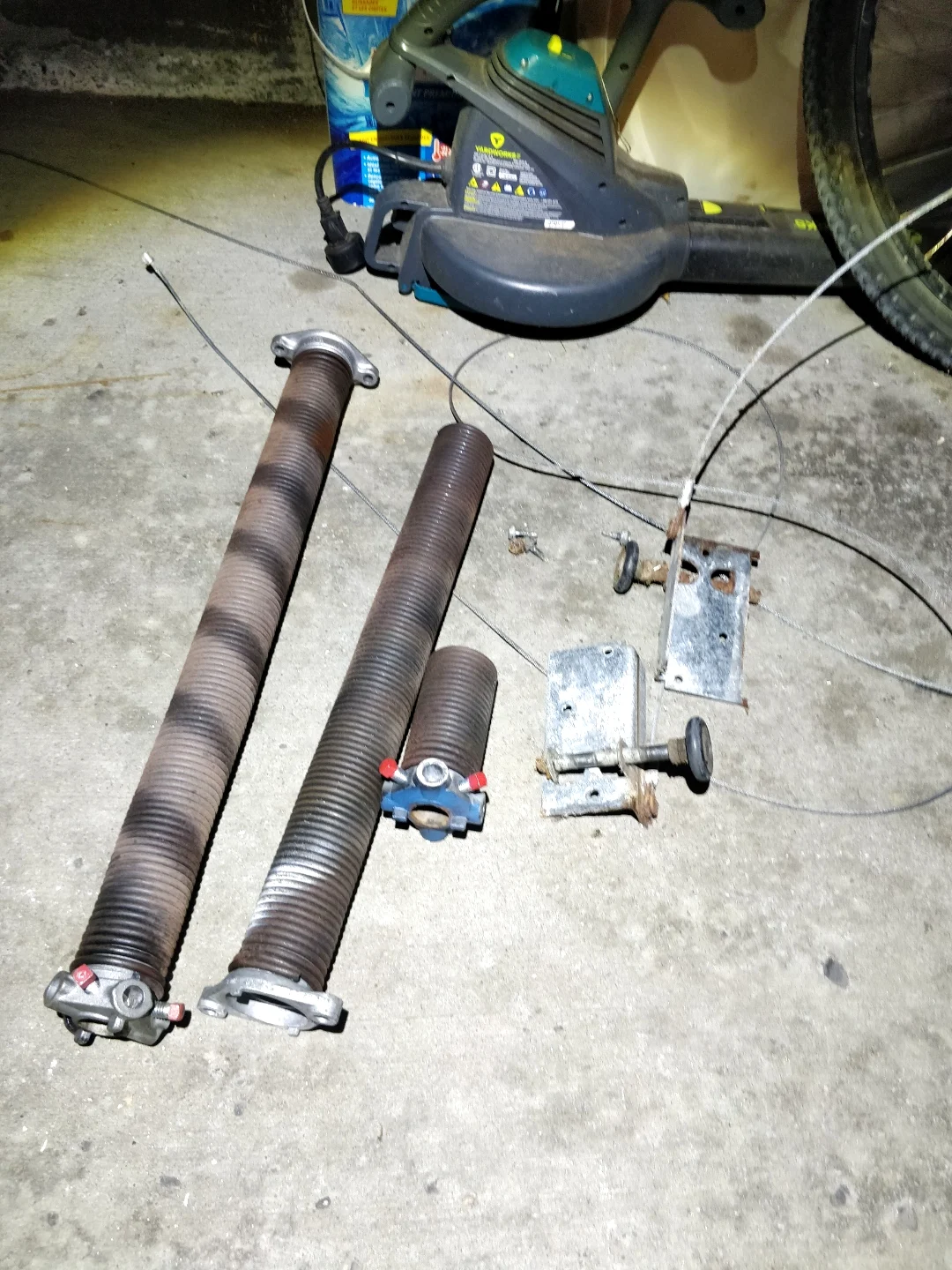
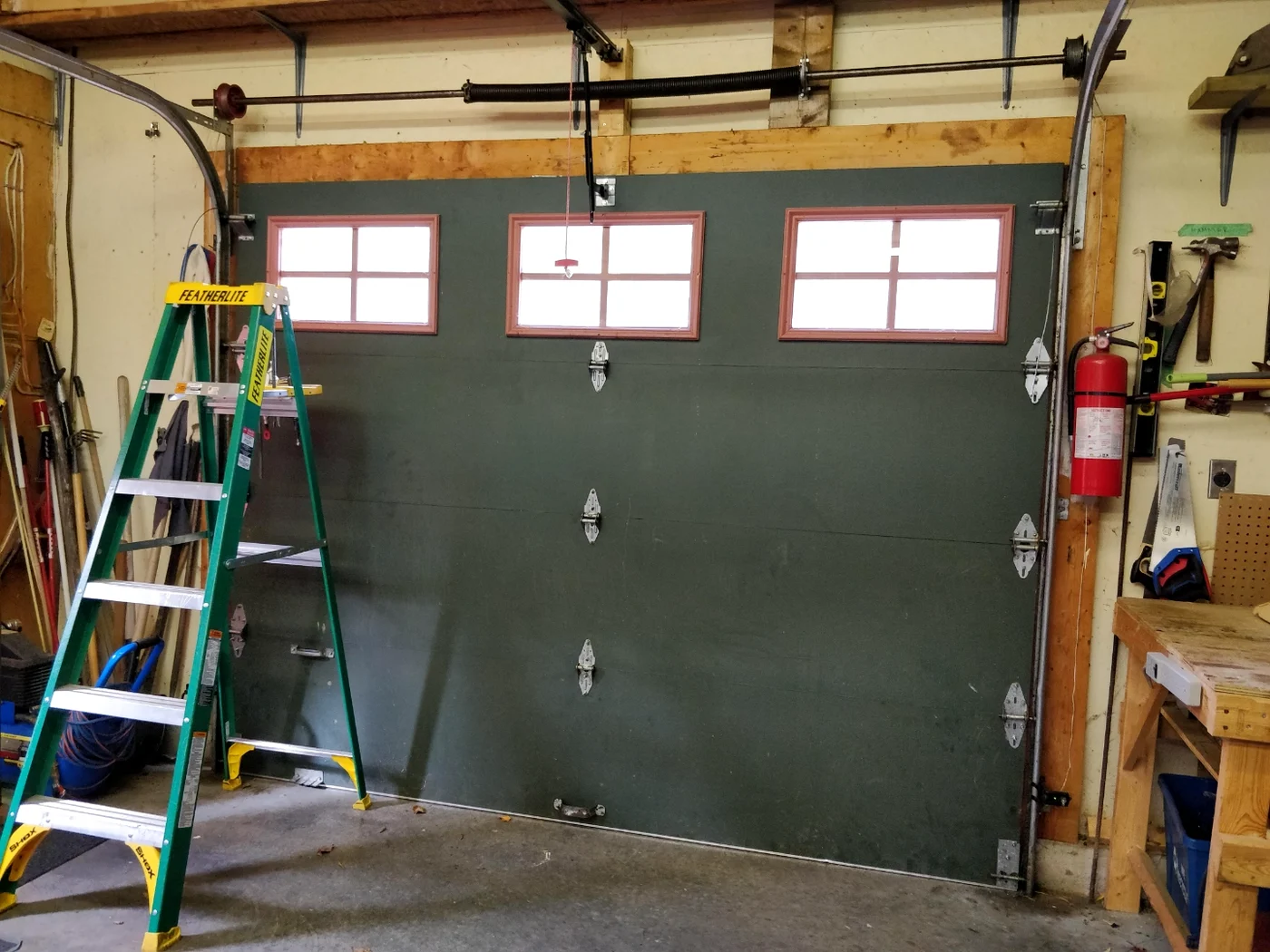
Real Liftime spring installation work
Should the door be rebuilt at the same time?
Not usually. If the springs were the only thing that failed and the rest of the system is in reasonable shape, a fresh pair of springs is all you need. We'll do a quick check of the cables, drums, bearings, and rollers during the visit and flag anything that's near end of life — but we won't recommend replacing parts that still have years of service in them.