
R-16 vs R-18 Insulated Garage Doors in Ottawa — Which Do You Actually Need?
Quick answer
For an attached Ottawa garage used for parking: R-16 polyurethane is the right choice. R-18 adds ~10% more insulation for a modest premium — worth it only if you heat the garage or have a room above it. The bigger jump is going from any polystyrene door (R-12) to polyurethane (R-16+).
Ottawa winters average well below -20°C for weeks at a time. If you're replacing a garage door, the insulation level you choose will affect how cold your garage gets, how much you spend to heat it (if you heat it), and how the door feels to touch on a January morning. Two numbers come up most: R-16 and R-18. Here's what they actually mean and which one makes sense for your situation.
What R-value actually means
R-value measures thermal resistance — how well a material slows the flow of heat. The higher the number, the better it insulates. An R-16 garage door resists heat transfer at a level of 16; an R-18 door resists it at 18.
For context: most standard uninsulated single-layer steel doors sit at R-0 to R-2. A door upgrade from R-0 to R-16 is a significant improvement. The jump from R-16 to R-18 is a much smaller step — roughly 10–12% more insulation.
The number that matters more than R-16 vs R-18 is what the foam is made of.
Polyurethane vs polystyrene — this matters more than the R number
Garage door insulation comes in two types:
Polystyrene (EPS or XPS foam board) — the white pressed foam you'd recognize from shipping boxes. It's inserted between the two steel skins as a separate panel. Cheaper to manufacture. Typical R-value: R-6 to R-12. The door is lighter but the foam isn't bonded to the steel, so over time it can shift or compress. Most builder-grade and entry-level doors use this.
Polyurethane (injected foam) — liquid foam injected directly into the door cavity and chemically bonded to both steel skins as it cures. This creates a single rigid structure. Better R-value (R-16 to R-18+), better acoustics, and structurally stiffer. Polyurethane doors feel noticeably more solid and are significantly quieter — the foam dampens sound rather than letting it resonate through the steel.
For Ottawa specifically, a polyurethane-insulated door at R-16 will outperform a polystyrene door at R-12 in every meaningful way — thermal performance, noise, and rigidity. If you're comparing a polystyrene R-12 to a polyurethane R-16, the R-16 wins by a wide margin despite the R numbers being closer than they look.
R-16 vs R-18 in practice — what's the real difference?
| R-16 Polyurethane | R-18 Polyurethane | |
|---|---|---|
| Foam thickness | ~1¾ inch | ~2 inch |
| Steel gauge | 24–25 gauge | 24 gauge (heavier) |
| Insulation improvement over R-16 | — | ~10–12% |
| Typical cost premium | Base | A modest premium — call to discuss |
| Estimated annual heating savings vs R-16 | — | Modest — call to discuss your specific setup |
| Sound dampening | Very good | Slightly better |
| Door weight | Standard | 5–10 lbs heavier |
The honest summary: for most Ottawa homeowners with an attached garage they use for parking, R-16 polyurethane is the right answer. The energy savings of stepping up to R-18 will take 3–5 years to pay back the premium, and most people don't notice a difference in day-to-day comfort.
R-18 makes sense when you're heating the garage to workshop or home gym temperatures, or if you have a room directly above the garage where thermal performance is a priority.
Which R-value for which Ottawa garage situation
Detached garage, unheated, parking only — R-12 polystyrene is fine. You're not heating the space, so the primary benefit is keeping the interior temperature above freezing on the coldest days and preventing ice buildup on your car. Spending more on polyurethane won't move the needle here.
Attached garage, no room above, parking daily — R-16 polyurethane is the standard recommendation. You'll notice a significant difference vs any polystyrene door. The garage will stay 10–15°C warmer on a -25°C Ottawa day, which matters for your car, any pipes running through the space, and the door mechanism itself.
Attached garage with living space above (bedroom, office, rec room) — R-16 minimum, R-18 worth considering. Heat loss through an uninsulated or poorly insulated garage door transfers directly into the floor of the room above. R-18 earns its premium here. Also look at perimeter seals and the ceiling insulation of the garage itself — the door is rarely the biggest heat leak in this scenario.
Heated garage or workshop — R-18 or higher. If you're running a heater to keep the space above 10°C year-round, you'll recover the R-18 premium in reduced heating costs within 2–3 winters.
What Garaga R-16 and R-18 doors look like in practice
Most of the insulated doors I install in Ottawa are Garaga. Here's what the two levels actually deliver in their lineup:
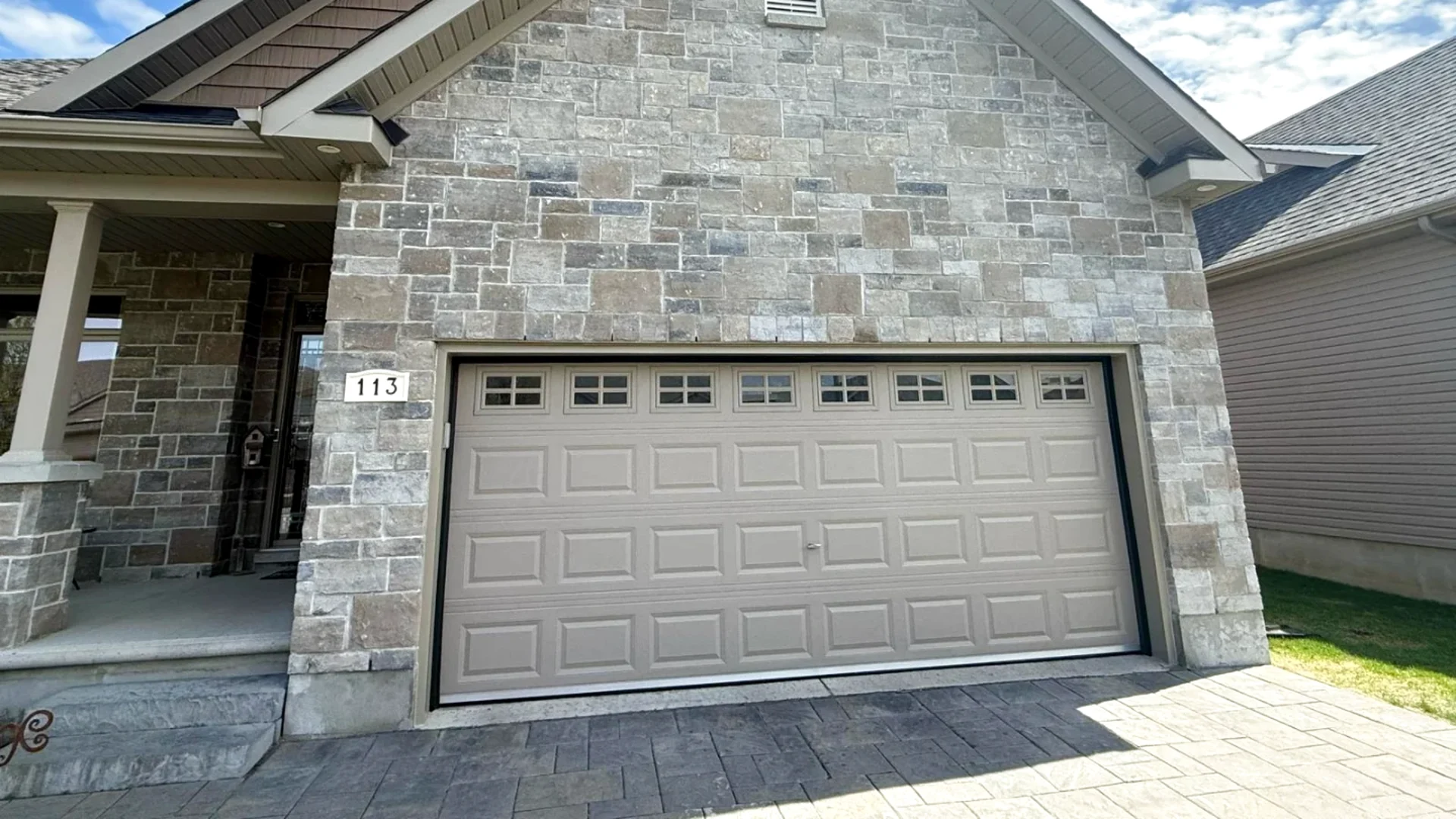
The Standard+ series hits R-16 with a 1-3/4 inch polyurethane core and 25-gauge steel. This is the door I put in for the majority of Ottawa attached garages — it punches well above what most builder-installed doors offer and the construction is noticeably solid.
The Express XL and higher-end models reach R-18 with a 2-inch core and heavier-gauge steel. The weight difference is real — your opener needs to be sized appropriately, and if you're on an older 1/2 hp chain-drive, it's worth upgrading to a belt-drive at the same time. I'll flag this when we discuss your specific situation.
A note on the R-value marketing game
R-values in garage doors are not regulated the same way as wall insulation. Some manufacturers measure the foam core alone; others include the steel skins. A "R-18" claim from one brand may not compare directly to an "R-16" from another measured differently. The brand and construction method matter more than the specific number — a well-made polyurethane door from Garaga or Steel-Craft at R-16 will outperform a poorly constructed "R-18" from a budget manufacturer.
Ask to see the full door spec sheet, not just the headline R number.
Frequently asked questions
What R-value do I need for a garage door in Ottawa?
For an attached garage in Ottawa, R-16 polyurethane is the standard recommendation for daily use. R-12 polystyrene works for a detached unheated garage. If you have a room above the garage or heat the space, R-18 is worth the upgrade.
What is the difference between R-16 and R-18 garage door insulation?
Both use polyurethane foam cores. R-18 has a slightly thicker foam layer and heavier steel. The insulation improvement is roughly 10–12% over R-16, delivering modest energy savings for a typical Ottawa garage. For most attached garages used for parking, R-16 is the better value.
Is polyurethane better than polystyrene insulation in a garage door?
Yes, significantly. Polyurethane foam is injected and bonded directly to the steel skins, making the door more rigid, better insulated, and quieter. Polystyrene is a pressed foam board inserted between layers — cheaper but less effective. For Ottawa winters, the performance gap is noticeable.
Does a more insulated garage door lower my heating bills?
Yes, but the biggest savings come from upgrading from an uninsulated or polystyrene door to a polyurethane door. The step from R-16 to R-18 delivers a smaller, modest improvement for a standard Ottawa attached garage. The door is rarely the only heat leak; also check your perimeter seals and ceiling insulation.
If you're replacing a door and want a straight answer on which insulation level makes sense for your specific setup — attached or detached, heated or not, room above or not — give me a call at (613) 703-3921. Five-minute conversation, honest recommendation, no pressure to buy the most expensive option.
— Michael
Liftime Ottawa provides residential garage door repair and installation across Ottawa and surrounding communities including Kanata, Barrhaven, Orléans, Nepean, and Stittsville. 5.0 stars on 650+ Google reviews. BBB Accredited A+.