
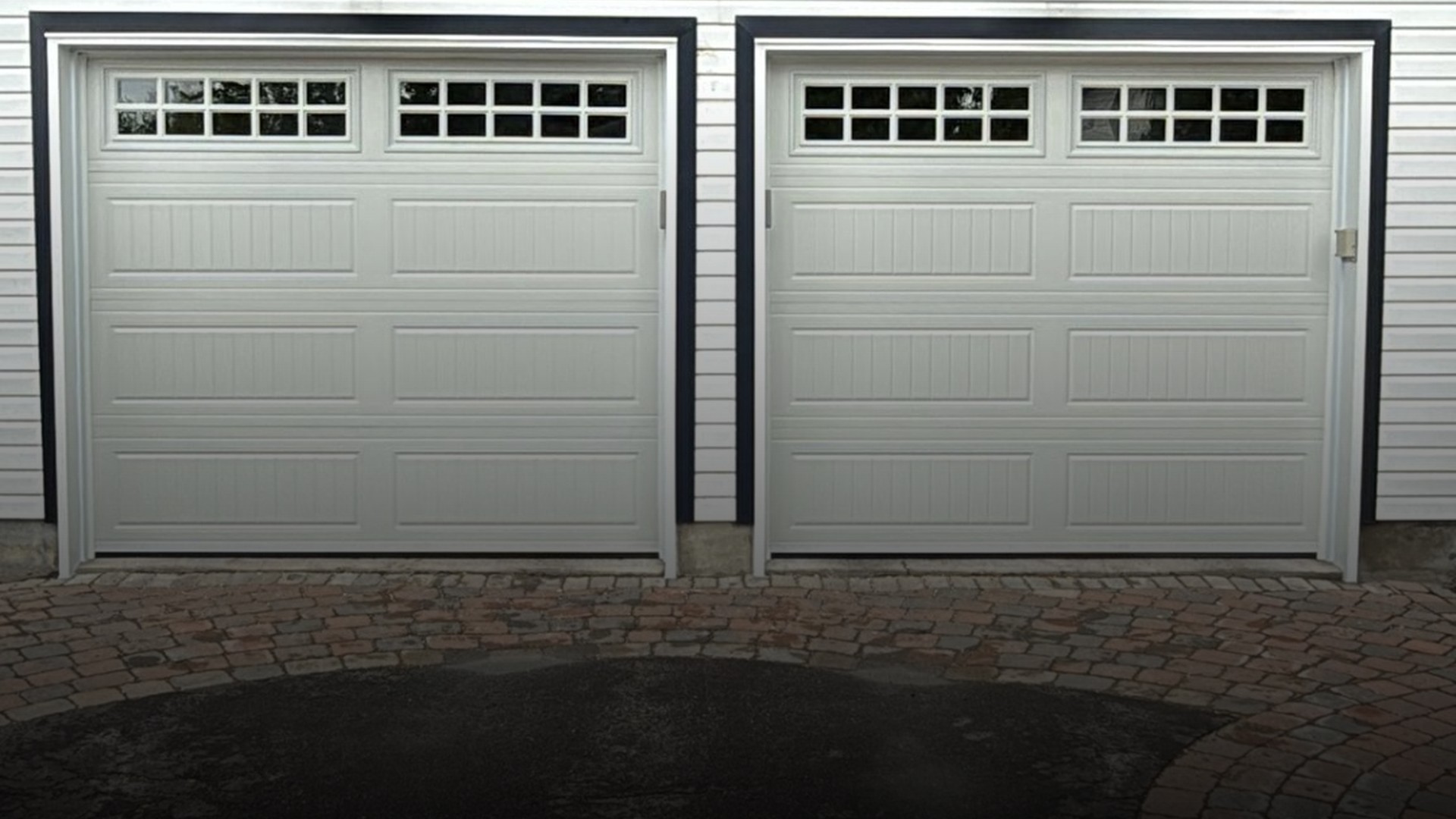
Summer Garage Door Problems in Ottawa: What the Heat Does to Your Door (and What to Do About It)
Quick answer
Ottawa summers put real stress on garage doors. Heat makes steel expand and doors bind in the tracks. UV rays crack rubber seals. Humidity warps wood trim. Opener sensors get blinded by direct sunlight. Lubrication evaporates faster. And springs calibrated for March don't behave the same in a 35°C August. Most of these are DIY-manageable with the right products. A few—springs, binding tracks, sensor replacement—are better left to a technician.
Every July and August I get a wave of calls from Ottawa homeowners whose doors worked perfectly all spring and are suddenly acting up. It's not a coincidence—it's the weather. Ottawa's summer heat isn't mild; we routinely hit 33–35°C with humidity that makes it feel like 40, and the sun beating on a dark south- or west-facing garage door can push surface temperatures well past 50°C. That kind of heat does things to metal, rubber, and wood that most homeowners don't think about until something stops working. Here's what's actually happening, and what you can do about it.
1 Heat Expansion: Why Your Door Sticks and Binds in Summer
Steel expands when it heats up. This is basic physics, but it has real consequences for a garage door that's built to tight tolerances. Your door's steel panels, the vertical and horizontal tracks, the hinges, the roller stems—all of them expand at slightly different rates when the temperature climbs.
On a typical Ottawa July afternoon, a standard 16-foot double door can expand by 3–5 mm along its width. That doesn't sound like much until you consider that the gap between your door panels and the track is only about 6 mm to begin with. When that gap closes, you get binding: the door hesitates mid-travel, strains against the opener, or refuses to open at all without a hard manual pull.
South- and west-facing garages are the worst offenders. I've measured surface temperatures on dark-coloured steel doors in Barrhaven and Kanata reaching 52–58°C on a sunny July afternoon. At those temperatures the door and tracks are operating well outside their design range for half the day.
What to do: Start by lubricating the tracks and rollers (covered in section 5). If the door still binds, inspect the track brackets—heat can cause them to shift. A technician can loosen the track hardware slightly and re-align to allow for the expansion gap. Don't force the door repeatedly; you risk damaging the opener's drive system.
2 UV Damage to Seals and Weatherstripping
The rubber and vinyl seals on your garage door—the bottom seal, the side seals, and the top seal—are there to keep out drafts, rain, insects, and Ottawa's notorious spring flooding. In winter, cold makes them stiff. In summer, UV and heat destroy them from the outside in.
Cheap vinyl weatherstripping (the kind sold at Canadian Tire) can start cracking and pulling away from the frame after just one or two Ottawa summers. Even quality rubber degrades faster when it's getting 8–10 hours of direct sun exposure in July and August. You'll see it as surface cracking, brittleness, the seal pulling away from the retainer channel, or gaps forming at the corners.
A failed bottom seal is the most common call I get in late summer. Water gets in under the door during rain, and homeowners also notice the door doesn't feel as tight anymore. What they don't always notice is the wasp nest that's been forming in the gap all season.
What to do: Inspect your seals in June before the heat peaks. Run your hand along the bottom seal from inside the garage with the door closed—if you can feel any daylight or air movement, the seal is compromised. For replacement, use EPDM rubber rated for Canadian climate extremes, not vinyl. The bottom seal slides into a retainer and is a reasonable DIY job. If the retainer channel itself is bent or damaged, that's a service call.
3 Humidity and Wood: What It Does to Your Trim and Frame
Ottawa's humidity in July and August regularly sits at 70–80%, and on muggy days—the kind where it doesn't cool off at night—it hits 90%+. If you have wood trim around your garage door, painted or not, that moisture gets in.
Wood trim absorbs humidity and swells. Over a few summers, this warping puts pressure on the door frame, pushing the side jambs inward. When the jambs close in, the door starts rubbing against them on its way up and down. I've seen cases in older Nepean and Westboro homes where the door had been grinding against the frame for so long that it had worn through the paint and into the wood itself.
Painted trim fares better, but only if the paint film is intact. Any cracking or peeling—which is also accelerated by UV in summer—lets moisture into the wood grain.
What to do: Check your wood trim in early June and repaint any cracked or peeling sections before the humid season starts. A quality exterior primer followed by a UV-resistant paint makes a real difference. If the jambs are already warped and pushing into the door's travel path, you're looking at either shimming the stops back out or replacing the trim entirely. This is also a good time to check whether the door is sitting square in the opening—humidity-warped frames can pull things out of alignment over time.
4 Opener Sensors Acting Up in Direct Sunlight
This one trips up a lot of Ottawa homeowners because it's intermittent—the door works fine in the morning, but in the afternoon it won't close, or it reverses for no apparent reason.
The safety photo-eye sensors on your opener work by maintaining an infrared beam across the bottom of the door opening. When the beam is broken, the door stops or reverses. The problem in summer is direct sunlight. In late afternoon, when the sun angles low and shines straight into a west-facing garage, it can overwhelm the receiver sensor with infrared light, making it think the beam is being blocked even when the opening is clear.
The giveaway is the blinking indicator light on the receiver sensor (usually the one without the wire coming from the back). If it's blinking rapidly and the door won't close, sunlight interference is the likely culprit.
What to do: First, clean the sensor lenses—a dirty lens is more vulnerable to sun interference. If the lenses are clean, try tilting the sensors slightly downward so they're aimed at the floor rather than directly across. A small cardboard sunshade taped above the receiver can solve the problem in stubborn cases. If none of this works and the sensor was already a few years old, replacement sensors are inexpensive. On the other hand, if the sensors themselves have been sitting in water from flooding (common in Ottawa basements and attached garages), they may have corroded internally and need replacement regardless.
5 Why Lubrication Dries Out Faster in Summer Heat
Most homeowners who lubricate their garage doors at all do it once a year, usually in the fall before winter hits. That's not enough in Ottawa's summer heat.
The problem is that lubricants—even good lithium-based greases—thin out and evaporate faster at high temperatures. The hinges, rollers, springs, and bearing plates that you greased in October will be running dry by July. A dry roller bearing is a roller that's grinding instead of rolling, which puts extra strain on everything upstream: the cable drums, the spring shaft, the opener's drive motor.
You'll usually hear it first: a squeaking or grinding sound on every cycle. By the time it sounds bad, the metal wear has already started.
A word on product choice: do not use WD-40 on metal garage door parts. WD-40 is a water dispersant, not a lubricant, and it actually removes existing grease. Within a few weeks of application, the part will be drier than before you started. Use a white lithium grease or a dedicated garage door lubricant spray (3-IN-ONE makes a good one). Apply it to the hinges, roller stems (not the nylon wheel), the torsion spring coils, and the bearing plates at either end of the spring shaft. Wipe off any excess—dripping grease attracts dust and turns into a grinding compound.
What to do: Lubricate in spring (April/May) and again in midsummer (July) if you're using the door daily. Takes about 10 minutes with the right product.
6 Why Your Springs Feel "Off" in Summer (vs. Winter)
Torsion springs are calibrated to balance the weight of your door at a specific tension. That tension is set based on the door's weight and, to a lesser degree, the ambient temperature. Steel behaves differently at different temperatures—it becomes slightly more elastic when warm and stiffer when cold.
In Ottawa, we swing from -30°C in February to +35°C in July. That's a 65-degree range, which is extreme by any standard. A spring that was perfectly balanced when your technician adjusted it in March may feel slightly overpowered in August, making the door jump up fast when released manually. Or it may feel slightly under-tensioned if the door was last serviced in deep winter and has gained some humidity-related weight through wood components or the bottom seal.
This seasonal drift is normal and usually minor. What makes it noticeable is when it compounds with something else—a door that's also binding due to heat expansion, or a lubricant that's dried out. The opener compensates up to a point, but it has a torque limit, and once you're asking it to work harder than it was designed to, wear accelerates.
What to do: If the door feels noticeably heavier or lighter than it did in spring, or if it's not staying open at about 3–4 feet off the ground on its own, the spring tension should be checked. Spring adjustment is not a DIY task—torsion springs store a significant amount of energy and a mistake can cause serious injury. Call a technician. It's usually a 20-minute job.
7 When to DIY vs. When to Call a Technician
I'm not going to tell you that everything on a garage door requires a professional. That's not true, and it's not useful. Here's an honest breakdown:
| Task | DIY? | Notes |
|---|---|---|
| Lubricating hinges, rollers, springs | Yes | Use lithium grease. Takes 10 min. |
| Replacing bottom seal | Yes | Slides into retainer channel. Buy EPDM, not vinyl. |
| Cleaning/realigning sensors | Yes | Clean lenses, tilt downward, add sunshade. |
| Repainting wood trim | Yes | Use UV-resistant exterior paint and primer. |
| Track realignment (minor) | Maybe | OK if you understand track geometry. Don't force it. |
| Spring tension adjustment | No | High stored energy. Injury risk is real. |
| Replacing broken springs | No | Always call a tech. Same reason. |
| Replacing sensors (wiring) | Maybe | Plug-and-play on most openers. Confirm your model first. |
| Fixing a door that grinds against the frame | No | Need to assess whether it's track, spring, or frame issue first. |
The general rule: if it involves springs or cables, call a technician. Everything else is fair game if you're comfortable with basic tools and working carefully with a heavy moving object.
If you're in Ottawa and you're not sure whether what you're looking at is a quick fix or something more serious, I'm happy to take a look. We do free estimates for anything that isn't a straightforward call.
8 The Summer Maintenance Checklist
Here's what I recommend to every Ottawa homeowner before the serious heat arrives in late June:
- Lubricate hinges, rollers, spring coils, and bearing plates with white lithium grease.
- Inspect the bottom seal for cracking, gaps, or pulling away from the retainer. Replace if needed with EPDM rubber.
- Check side and top weatherstripping for UV cracking, especially if it's vinyl and more than 3 years old.
- Look at the wood trim for peeling paint or visible swelling. Repaint any bare spots before they absorb summer humidity.
- Test the auto-reverse: place a 2x4 flat on the floor under the door and hit close. The door should reverse on contact. If it doesn't, the opener's force setting needs adjustment.
- Clean the photo-eye lenses with a dry cloth. Confirm both indicators show solid (not blinking) green.
- Manually disconnect the opener and lift the door by hand. It should go up smoothly and stay put at about waist height. If it drops back or shoots up, the spring balance is off.
That whole checklist takes about 20–30 minutes. It will catch 80% of the problems before they become a call to a garage door tech on a Saturday afternoon in August.
Something not right with your door this summer?
I've been servicing garage doors in Ottawa since 2017. If your door is sticking, grinding, reversing for no reason, or just not feeling right, give me a call or request a quote online. Most summer problems can be diagnosed and fixed in one visit.