
The wood around your garage door is doing more work than it looks. Tracks bolt to it, springs anchor to it, weather seals press against it. Once that wood softens or rots, every piece of hardware attached to it starts to fail with it. We replace it properly — with pressure-treated lumber or PVC trim — so whatever goes back on top has a solid anchor for years.
Why door framing matters
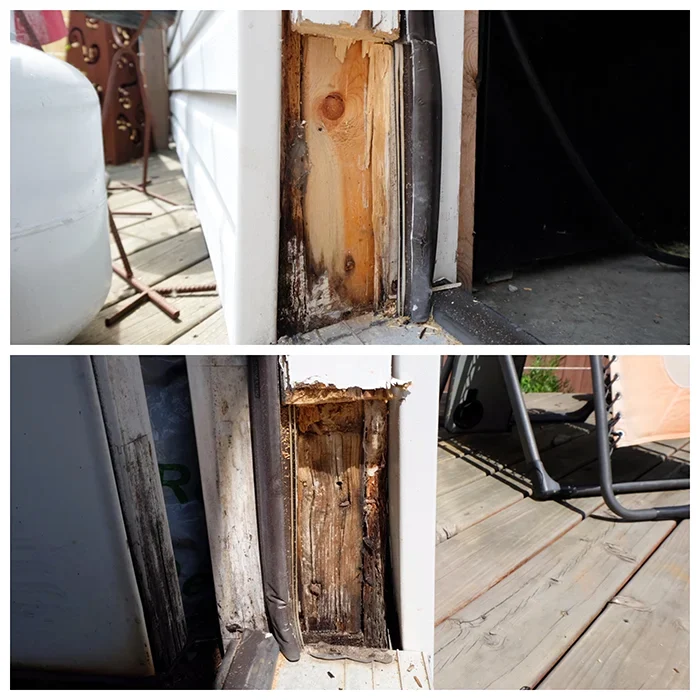
The "frame" is the wooden surround your garage door is mounted to — the two vertical jambs and the horizontal header above. Tracks bolt to it, springs anchor to it, and the side and top weather seals press against it. When that wood rots, everything that attaches to it loses its anchor point. The door warps, seals gap, water gets behind, and the rot accelerates.
What causes garage door framing to rot
- Driveway runoff splashing back against the jambs
- Snow piled against the wood for months at a time
- Bottom seal failed — water now runs onto the wood underneath
- Salt from de-icers wicking up the wood
- Original framing not pressure-treated or no flashing installed
- Trapped moisture between the wood and aluminum capping
What we replace
- Vertical jambs (both sides)The most common rot point; usually the bottom 12–24" goes first where snow piles against it.
- Header (top piece)Rot here is less common but more serious because the door springs anchor to it.
- Sub-floor / footing areaIf rot has spread into the framing below, we'll flag it and bring in a carpenter referral if needed.
- Threshold trimThe wood at floor level often goes first — it's the lowest, wettest piece in the assembly.
- Trim and stopsReplaced with pressure-treated lumber or PVC trim that won't rot again.
The right time to check: any new door install. We always inspect the framing before mounting a new door — if it's rotted, we'll let you know with photos and an honest quote to fix it before the new door goes on. A new door on a rotted frame is throwing money away.
How we do it
- Diagnose how far the rot has spreadSometimes it looks worse than it is; sometimes the visible damage is the tip of the iceberg. We probe with an awl and check behind any trim or capping.
- Quote both optionsPatch and seal vs. full jamb replacement. You decide based on the photos and our honest read of how much life is left in the existing wood.
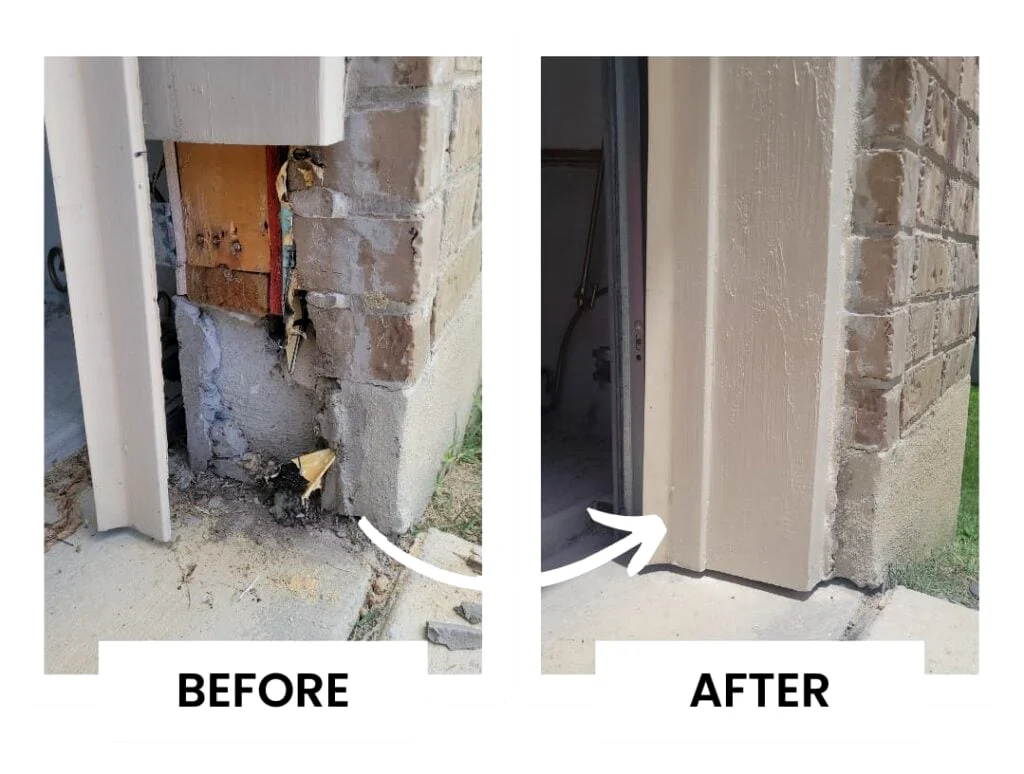
- Remove rotted materialWe cut back to solid wood, brush out debris, and check the structure underneath.
- Replace with pressure-treated lumber or PVC trimSized to match your door's channel so tracks, hinges, and seals all land where they should.
- Re-flash and re-sealFlashing tape, caulk at the joint with the brick or siding, and paint to match.
- Capping if neededWe can wrap the new wood in matching aluminum capping the same day (see our aluminum capping page).
What rotted framing actually looks like
When does framing repair happen?
Framing work comes up in four common situations:
- Standalone repair — your existing door is fine but the trim/jambs are rotting
- Before a new door install — required step if framing is compromised; we won't mount a new door on rotted wood
- After water damage — burst pipe, ice dam, or roof leak that reached the garage door area
- Combined with capping — we replace the wood with pressure-treated lumber, then wrap it in maintenance-free aluminum capping so it never rots again