
Your lift cables carry the actual weight of your door. They're modest-looking — a couple of lengths of galvanized wire wound around a drum at the top of the door — but they take the load every time the door moves. New cables are usually paired with new springs or new drums during a tune-up, and they're a basic part of any new-door install.
What we install
- Heavy-duty 7×19 galvanized aircraft cable — the standard for residential doors
- Heavier gauges for double-car or extra-tall doors
- Stainless cable for coastal or high-humidity garages (rare in Ottawa, but available)
- Replacement drums if existing drums are pitted or worn
- Centre bearing plate replacement if needed
- New bottom bracket fixtures where the cable loops onto the door
Why we install cables in pairs
Both cables on a residential door are the same age, made the same week, exposed to the same winters, and rated for the same number of cycles. When one's at end of life, the other is close behind. Replacing only one means a follow-up service call within months — that's why we generally recommend doing both at once. The cost difference is small and the long-term result is better.
Sized to your door
Lift cables come in different gauges. A standard 9' wide residential door uses 1/8" 7×19 cable. A heavier double-car door uses 3/16". Oversized commercial doors go bigger. We size the cable to the door's actual weight and never undersize to save a few dollars.
What a fresh-cable install looks like
- Door securedVise grips on the tracks lock the door in the down position before we touch anything under tension.
- Spring tension releasedCables can only be installed safely with the springs at zero tension.
- Old cables removedExisting cables, bottom bracket fixtures, and (if needed) drums are taken off.
- New cables installedSized cable installed on the drums, properly wrapped, and looped onto the bottom brackets.
- Springs wound and door re-balancedSprings back to spec, door balanced so it stays at half-height on its own.
- Cycle tested and lubricatedFull open/close cycles, hinges and rollers lubricated.
More Liftime install work
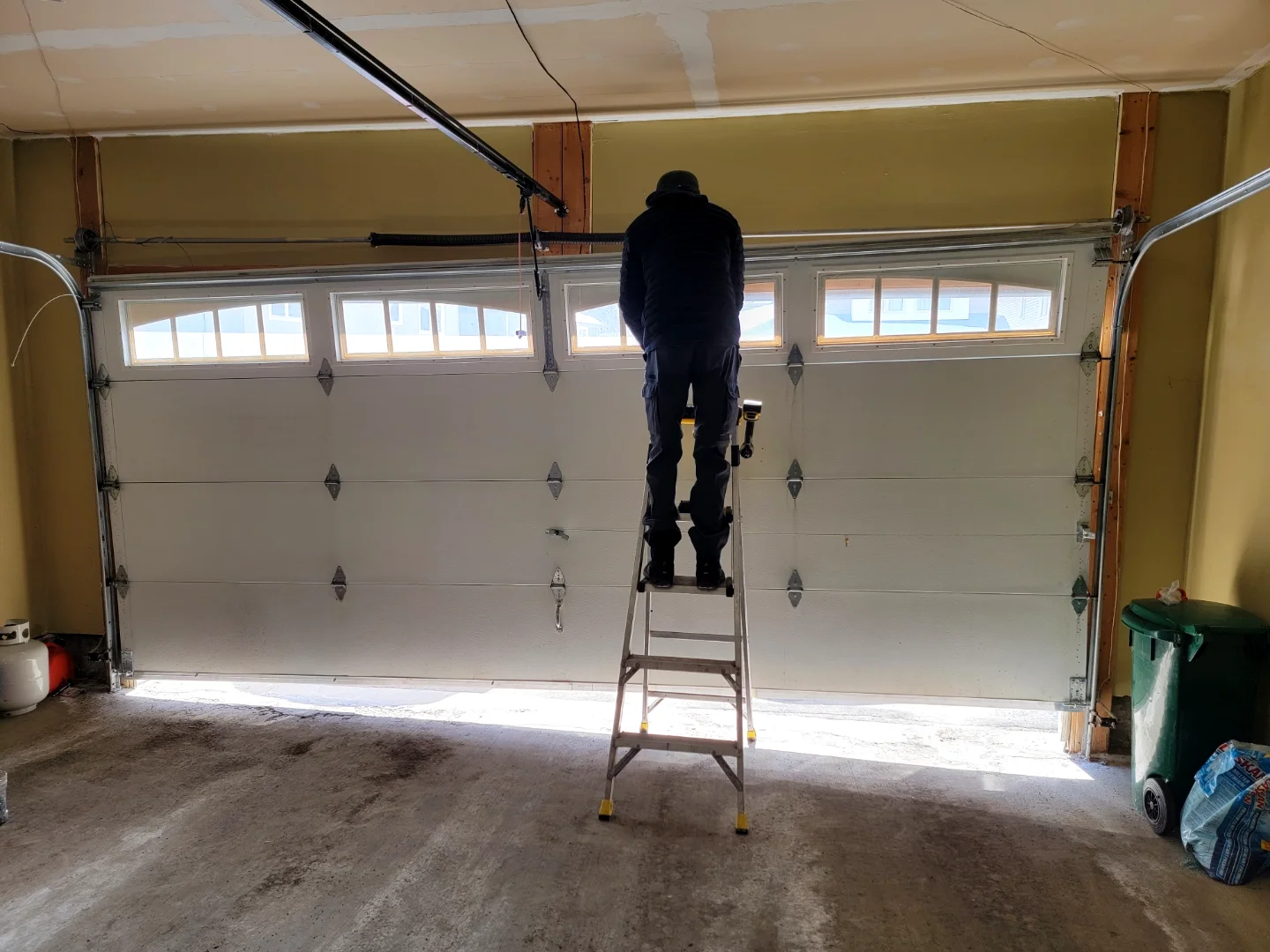
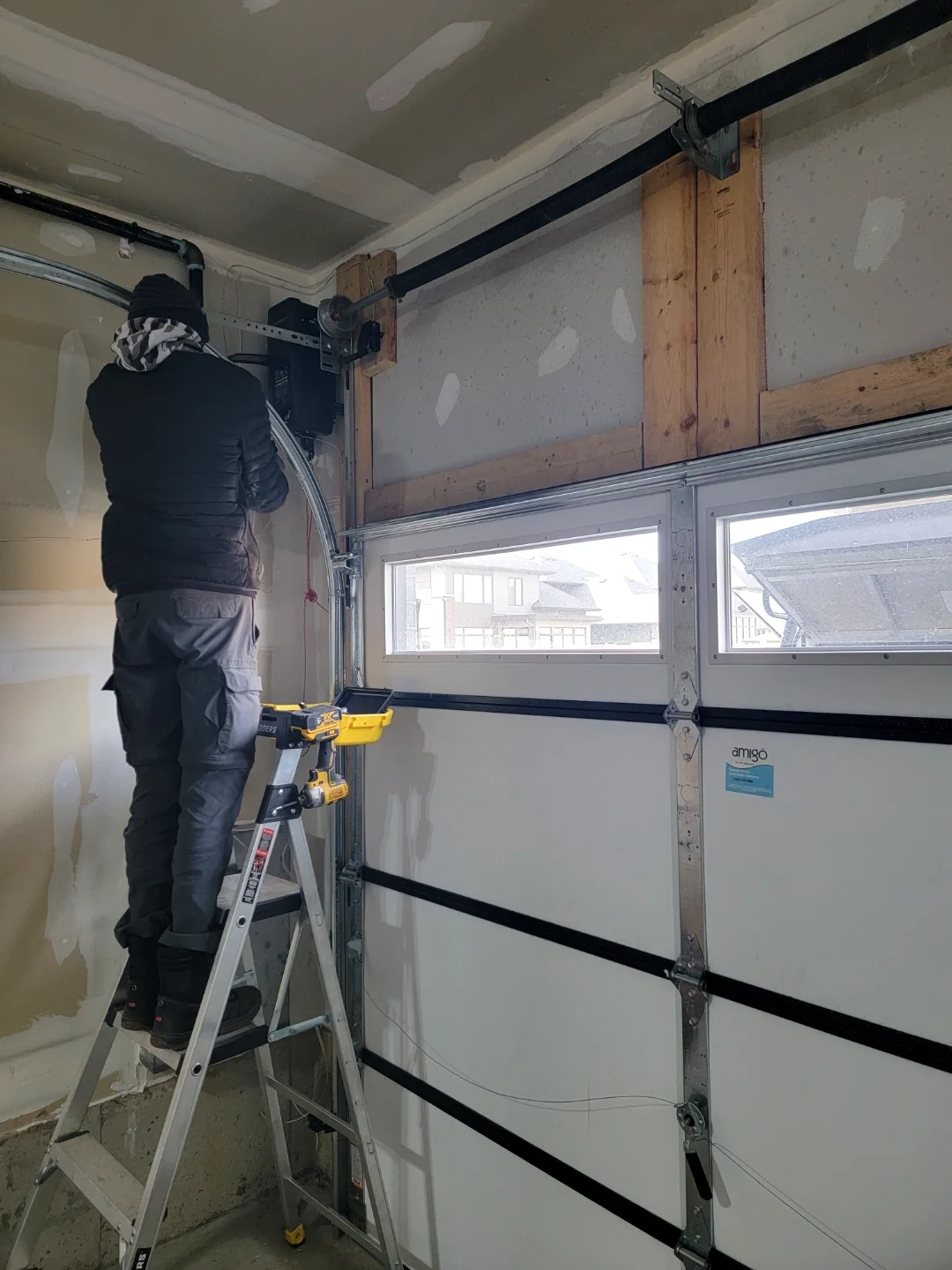
When cable install is part of a bigger job
Cable installation usually happens in one of three contexts:
- New door install — fresh cables come standard with every new door we hang
- Spring replacement — if cables are showing wear, we recommend replacing them at the same time so the door is fully refreshed
- Standalone cable replacement — when cables have frayed, snapped, or come off the drum, we replace them as a focused repair
For a standalone cable install, we always check spring tension and re-balance the door as part of our standard garage door repair workflow — running new cables on top of mis-tensioned springs just hides the underlying problem.
How long should new cables last?
Quality 7×19 galvanized cable on a residential door under typical use should last 10–15 years. They fail earlier when: the door is unbalanced and the cable is doing some of the spring's job; the cable rubs against a misaligned drum or pulley; or salt and humidity from winter slush rust the strands from the inside. If the cable was undersized to begin with — or the door has had a recent spring installation that wasn't matched to the door's weight — that shortens life too. Annual lubrication of the drum and pulleys roughly doubles useful cable life.